
Disclosure: As an Amazon Associate I earn from qualifying purchases. Some links are affiliate links. You pay the same.
A good flashlight is brightness you can use, runtime that matches the job, and a size you will actually carry. Ignore the 50,000-lumen ads. A 3,000-lumen turbo that steps down in 30 seconds is a screenshot, not a mode you leave on. This page is the buying basics — how to pick a lane — not another six-review roundup. This is a spec-based first look, not a hands-on test. Numbers below come from the manufacturer or a named listing.
For the physics of lumens vs candela see Lumens Explained. For a longer older checklist, the original page is still here: Things to Look for in the Best Flashlight.
Ignore the 50,000-lumen ads
Unbranded Amazon tiles love a five-figure lumen claim and a stock photo of a blue laser. Reputable makers publish an ANSI/PLATO FL1 table: lumens, candela, throw, runtime, IP, drop. If they will not, treat the box number as advertising. Real 2,000–4,000 lm compacts thermally step down. Acebeam writes the H18 turbo as 4,000 ~ 700 lumens, 30 s ~ 3 h 40 min. That is the honest pattern: a burst, then a number you can actually use. Fake listings print 10,000 lm / 8 hours and stop.
Around the house, a few hundred honest lumens is plenty. Outdoors, 1,000+ is easier. Shop the mode you will leave on — Eco, Low, Mid — not the turbo line.
Lumens vs candela vs flood
A lumen is total light, all of it, in every direction. It does not tell you whether that light is a fat flood for a tent or a tight bright center spot that reaches a trail marker. For reach you need candela (peak beam intensity) and the throw that candela implies. A lantern and a pencil beam can share a lumen rating and look nothing alike. Full unpack, with the ANSI 0.25-lux definition: Lumens Explained.
Match the beam to the night. House work is about 200–500 honest lumens. Trail and camp often want flood plus runtime, not a search beam. Tactical and search want candela. You rarely get both from one optic.
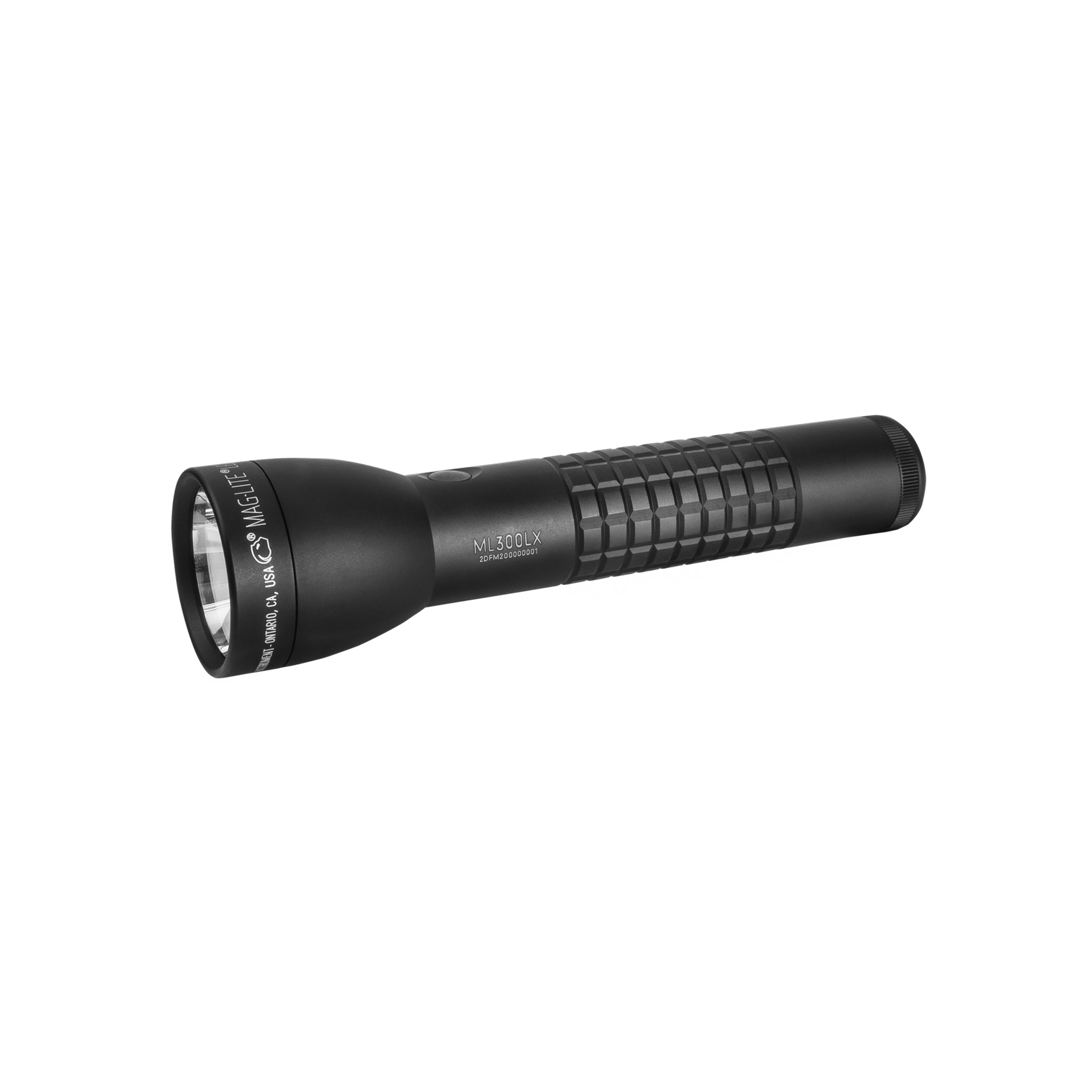
The candela-for-lumens example is the Maglite ML300LX 2D. Maglite’s spec sheet lists 487 lumens, 26,139 candela, and 323 m beam distance, plus Eco of 260 hours on two alkaline D cells. 487 lm is not a 2026 flex. 26,139 cd in a large, focusable reflector is a real driveway and trail beam. (Source: Maglite, Specifications — ML300LX 2D.)
Verified Amazon ASIN for the Maglite ML300LX 2D is B01189CFAE.
The opposite job is a flood headlamp. Acebeam’s H18 (6500K) is listed at 4,000 lumens and only 6,561 cd / 162 m on turbo. Four thousand lumens, half the Maglite’s throw. That is a campsite flood on your forehead — which is exactly what you want in a headlamp and a bad search light. Turbo is a 30-second burst; ultra-low is 7 lumens for 280 hours. (Source: Acebeam H18.) Short write-ups live on Best Camping Flashlights and Best Headlamps. Amazon is a search — confirm the listing says H18.
Batteries in 2026
USB-C 18650 or 21700 is the default. Cheaper per hour than alkaline if you can charge. A removable cell plus a charged spare beats a sealed pack you cannot swap. Sealed USB-C is fine on a keychain you will plug in weekly. It is a paperweight in a week-long outage. Watch where the port lives: on the body you plug the light in; on the cell you are fishing a battery out of the tube in the dark. The rechargeable hub is Best Rechargeable Flashlights. Cell sizes (18650 vs 21700 vs AA, plus 14500 and D-cell) are unpacked on 18650 vs 21700 vs AA.
When the grid is down, grocery-store AAs still exist. Dual-fuel is the honest emergency pick: rechargeable for daily use, two standard AAs when USB is gone. The site example is the ThruNite Archer 2A C. ThruNite rates it 1,018 lumens / 167 m / 7,000 candela on the included USB-C cell, and 500 lumens / 93 m on 2×AA. That AA number is the outage number. High on the included cell is a 30-second burst (1,018 ~ 519 lm). Full kit, including the D-cell backup: Best Flashlight for a Power Outage. (Source: thrunite.com/archer-2a-c.) No verified Amazon ASIN — confirm the listing says Archer 2A C, not the AA-only V3.
When USB will not exist at all — car, cabin, hall closet that sits a year — D-cell alkaline still wins on logistics. That is the Maglite 2D again. Eco 260 hours is why it belongs in a glove box. You are buying D cells, not USB-C. IPX4 is rain, not a dunk. It is a club, not a pocket light.
Size: pocket, glove box, garage
Buy the one you will have on you. A 20 oz Maglite lives in the car. An 18650 tube lives in a jacket. A 10 g keychain lives on the keys. If you need two hands to hold it, it is not EDC. Coat-pocket work lights and D-cells fail that test on purpose — they are different jobs. Pocket carry: Best EDC Flashlights.
The “it has to live on you” extreme is the Wuben E2 Pulse. Wuben’s FL1 table: 10.7 g, main beam High 150–100 lm, 1 min then 30 min, Low 1 lm / 7 h, 26 m / 169 cd, built-in 120 mAh cell, USB-C, IP66. 150 lumens that lasts a minute is a keychain burst, not a trail light. The useful modes are the 1-lumen flashlight and the 10-lumen marker. (Source: Wuben E2 Pulse.) No verified Amazon ASIN; do not grab a Wuben E7 or E8 by mistake.
Rain, dunks, and drops
Read the IP line as a job, not a trophy. IPX4 is rain and splash — Maglite’s 2D is here. IP66 is heavy rain, not a dive (Wuben lists the E2 Pulse at IP66). IPX8 / IP68 is a dunk, and only for the meters and minutes the maker actually printed: Acebeam lists the H18 at IP68, 2 m / 30 min; Wurkkos lists the FC11C at IPX-8 (2 m). Those are manufacturer ratings, not a soak test on this desk.
Drop ratings are the same story: 1 m vs 1.5 m vs 2 m on the sheet. Aluminum (6061, hard-anodized) takes a hit better than cheap plastic, and it sinks heat on turbo. Plastic is lighter and cheaper. Neither number means indestructible. Match the rating to the job — porch rain vs a boat deck — and stop there.
One button vs Anduril (hobby button UI)
One button you can use in the dark beats a clever UI you have to relearn at 2 a.m. Anduril 2.0 is a gift if you like ramping and aux LEDs. It is a support call if you wanted four modes and a lockout.
The contrast on this site is two Wurkkos lights, same brand, opposite homework. The HD10 is Anduril 2.0 on a 46 g 14500 right-angle (1,200 lm / 129 m / IP68 on Wurkkos’s sheet — 14500 only, not dual-fuel AA). The FC11C is a simple side-switch 18650: moon / low / mid / high / turbo, four-click lockout, turbo steps down after 90 seconds. Pick the one you will still remember without a manual. Short write-ups: HD10 on Best EDC; FC11C on Best Budget. (Sources: Wurkkos HD10; Wurkkos FC11C.) Search Amazon for the exact model names; we do not have verified ASINs for either.
Wurkkos HD10 (Amazon search — confirm the listing says HD10, not HD12):
Wurkkos FC11C (Amazon search — confirm the listing says FC11C, not the older FC11):
Under $30 still exists
Budget here is street price from a named maker with a printed FL1 table, not a fake 10,000-lumen tile. The hub is Best Budget Flashlights.
The cheap 18650 tube you can still source is the Wurkkos FC11C: currently about $22 on wurkkos.com ($21.99 as of the budget write-up; was $39.98). Nichia 519A, 95 CRI, 1,200 lumens / 155 m / 6,008 cd on turbo, and that turbo is a 90-second burst by design. 6,008 cd is a fraction of the Maglite 2D’s 26,139 cd — more spill, less reach. Confirm the listing says FC11C, not the older FC11. (Source: Wurkkos FC11C.)
Pick a lane
Do not buy one light for every night. Pick the job, then open the hub:
- Best Flashlights 2026 — the current map.
- Best Camping Flashlights — flood, lantern, runtime, D-cell car kit.
- Best Tactical Flashlights — candela, tail switch, search — not a tent lamp.
- Best Headlamps — both hands free.
- Best EDC Flashlights — it has to live on you.
- Best Rechargeable Flashlights — USB-C 18650/21700, spare cell vs sealed pack.
- Best Budget Flashlights — named makers under about $30–$45.
- Best Flashlight for a Power Outage — dual-fuel AA and D-cell when USB is gone.
- Best UV Flashlights — 365 nm is a different tool.
Still want a checkbox list? The older page remains: Things to Look for in the Best Flashlight. And if you only remember one number from this page, make it candela, not the 50,000-lumen ad: Lumens Explained.
Disclosure: As an Amazon Associate I earn from qualifying purchases. Some links are affiliate links. You pay the same.