
Disclosure: As an Amazon Associate I earn from qualifying purchases. Some links are affiliate links. You pay the same.
See Maglite ML300LX 2D on Amazon
Lumens are the number everyone shops. They are also the number Amazon junk listings lie about. A lumen is total light — all of it, in every direction. It does not tell you whether that light is a fat flood for a campsite or a tight hotspot that reaches a trail marker. For that you need candela (and the throw that candela implies).
Lumens tell you how much total light a flashlight produces, but not where that light goes. A wide flood can light a campsite; a tighter beam can reach a trail marker. For beam intensity and reach, you also need candela (cd) and throw.
New to the topic? Start with Best Flashlights 2026, or jump to Best Tactical Flashlights if you care about distance.
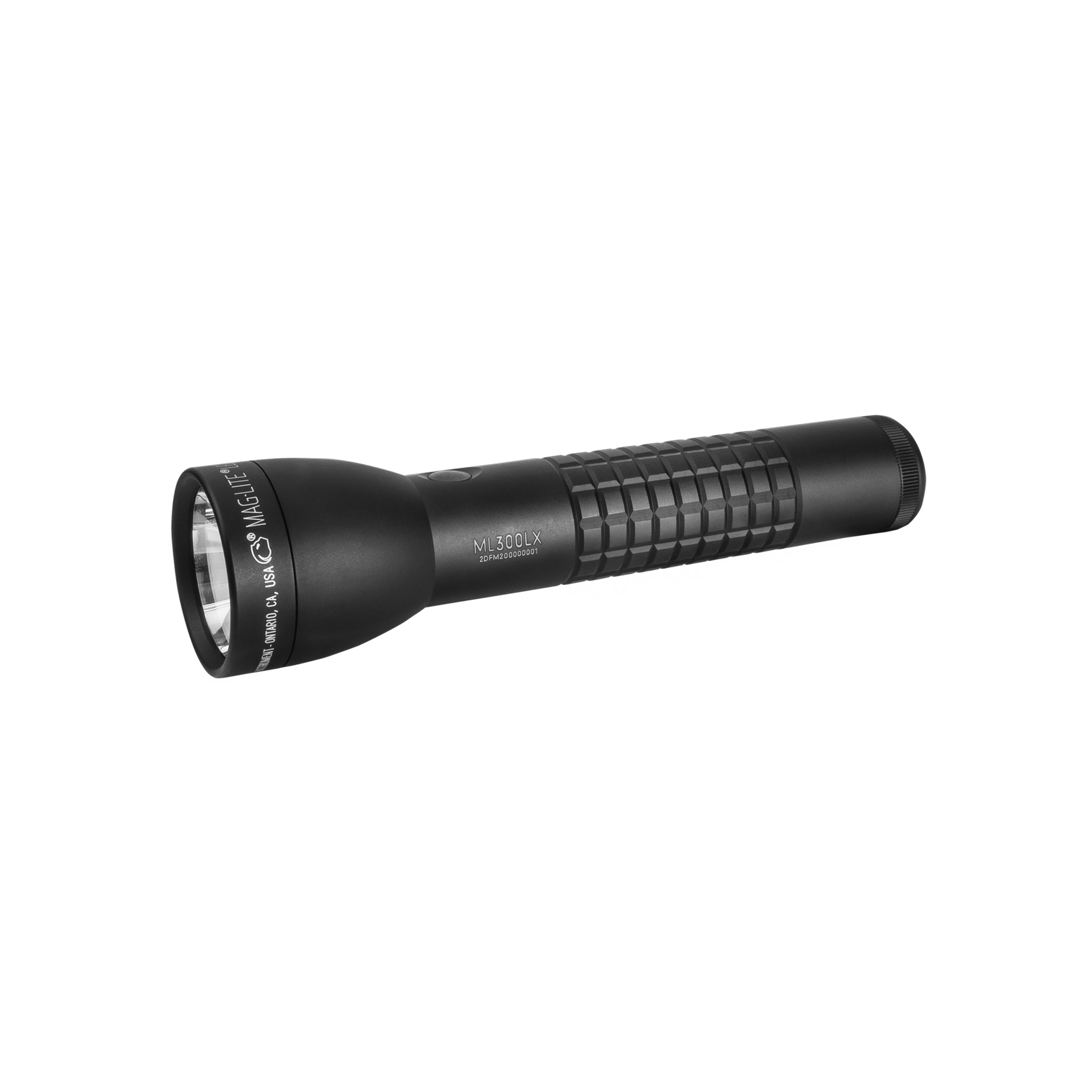
No lab tests on this page. Specs are from the manufacturer. The examples are lights we already cite elsewhere: Maglite’s ML300LX 2D at 487 lumens and Wurkkos’s HD02 PRO at 3,200 lumens on the spotlight. They are a clean pair because the throw is almost the same.
Lumens vs candela vs throw
Three numbers, three jobs:
- Lumens (lm) — total output. How much light leaves the bezel, summed over the whole beam. A lantern and a pencil beam can share a lumen rating and look nothing alike.
- Candela (cd) — peak beam intensity. How hard the hottest spot is. This is the “does it reach” number.
- Throw / beam distance (m) — under ANSI/PLATO FL1, the distance at which that hotspot falls to 0.25 lux (about full-moon light on an open field, in Streamlight’s ANSI explainer). It is calculated from candela, not from lumens: distance ≈ √(cd / 0.25). (Source: Streamlight, ANSI/PLATO FL 1 information.)
Worked example from Maglite’s own sheet: 26,139 cd → √(26,139 / 0.25) ≈ 323 m. That matches Maglite’s listed 323 m. The 487 lumens are doing a lot of their work in a large, focusable reflector. (Source: Maglite, Specifications — ML300LX 2D.)
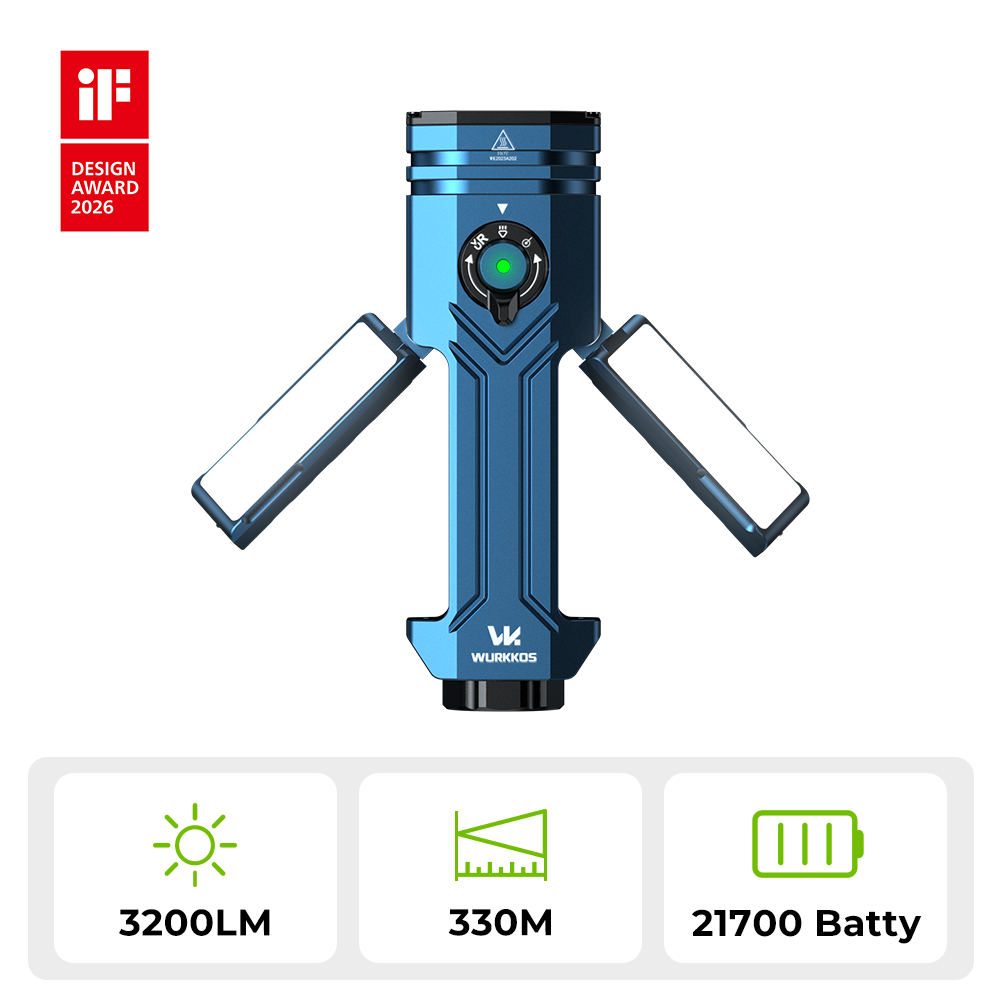
Wurkkos lists the HD02 PRO spotlight at 3,200 lumens, 27,175 cd, 330 m (Luminus SFT70.2). √(27,175 / 0.25) ≈ 330 m — again, the sheet is internally consistent. (Source: Wurkkos HD02 PRO.)
Put those two side by side:
| Maglite ML300LX 2D | Wurkkos HD02 PRO (spotlight) | |
|---|---|---|
| Lumens | 487 (Maglite) | 3,200 (Wurkkos) |
| Candela | 26,139 | 27,175 |
| Throw | 323 m | 330 m |
| What that means | Similar reach, less total light, big D-cell reflector | Similar reach, ~6.5× the lumens — fatter beam / more spill |
If you only shopped lumens, the HD02 PRO looks seven times the light. If you only shopped throw, they are twins. The extra lumens on the Wurkkos are going into a wider, brighter spill (and the HD02 PRO also has separate high-CRI wing floods up to 600 lm, which do not help the 330 m figure at all).
A flood headlamp makes the opposite point. Acebeam’s H18 (6500K) is listed at 4,000 lumens and only 6,561 cd / 162 m on turbo. Four thousand lumens, half the Maglite’s throw. That is a campsite flood on your forehead, which is exactly what you want in a headlamp and a bad trail search light. (Source: Acebeam H18.)
Why “10,000 lumens” on Amazon is often junk
Unbranded listings love a five-figure lumen claim and a stock photo of a blue laser beam. A few tells, none of which require a lab:
- No ANSI/PLATO FL1 table. Reputable makers publish lumens, candela, throw, runtime, and IP rating in the same chart. Streamlight’s explainer is the consumer version of that standard.
- Lumens with no candela. If they will not print candela, they are hiding a flood emitter in a cheap reflector — or inventing the lumen number.
- Turbo with no stepdown note. Real 2,000–4,000 lm compacts thermally step down. Acebeam writes “4,000 ~ 700 lm, 30 s ~ 3 h 40 min.” Fenix writes that PD36R Pro turbo runtime includes reduced output. Fake listings print 10,000 lm / 8 hours and stop.
- Emitter vs flashlight. An LED’s datasheet lumens at a lab current are not the lumens at the bezel of a $19 host on a mystery cell.
Our own How to Choose a Flashlight note still holds: ignore the 50,000-lumen ads. Around the house, a few hundred honest lumens is plenty. Outdoors, 1,000+ is easier. The Maglite at 487 lm is still a usable trail beam because of candela. The HD02 PRO at 3,200 lm is a different tool — more light on the ground around you — not automatically “6.5× farther.”
Runtime is a curve, not a trophy
ANSI/PLATO FL1 runtime starts 30 seconds after turn-on (fresh specified batteries) and runs until output hits 10% of that initial value. (Source: Streamlight, ANSI/PLATO FL 1.) That means a package “3.5 hours” can include a hard thermal drop after two minutes. It is not a promise that turbo stays turbo.
Read the low mode. Maglite Eco is 260 hours — that is the number that matters in a glove box. Fenix’s CL26R Pro “408 hours” is the 5-lumen downlight, not the 500-lumen 360° High (10 hours on Fenix Store’s table). Acebeam H18 ultra-low is 7 lumens / 280 hours; turbo is 30 seconds at 4,000. Same light, different nights.
ANSI FL1, in one pass
The current consumer flashlight test standard is ANSI/PLATO FL 1 (Portable Lights American Trade Organization; evolved from ANSI/NEMA FL1). It standardizes how makers measure and icon-mark:
- Light output (lumens)
- Peak beam intensity (candela)
- Beam distance (meters, 0.25 lux)
- Run time (to 10% of initial)
- Impact resistance
- Water resistance (IPX / IP)
It is a test method, not a quality award. A maker can FL1-test a mediocre light. A listing that will not even pretend to follow FL1 is the one to skip. We are not running those tests here; we are reading the sheets of makers who publish them (Maglite, Wurkkos, Acebeam, Fenix, SureFire).
What to actually shop
- Match the beam to the job: flood for camp, candela for distance, both only if the sheet shows both.
- Read lumens and candela. If throw is listed, check that it roughly matches √(cd / 0.25).
- Read the mode that you will actually leave on — Eco / Low — not turbo.
- Prefer a named maker with an FL1-style table over an anonymous “100,000 lumens” tile.
Related: How to Choose a Flashlight · Best Flashlights 2026 · Best Camping Flashlights · Best Tactical Flashlights · Best Rechargeable Flashlights
Maglite ML300LX 2D (verified ASIN B01189CFAE):
Wurkkos HD02 PRO — buy from Wurkkos. Amazon search only (no verified PRO ASIN; confirm the title says HD02 PRO, not HD02):
Buy HD02 PRO from Wurkkos Check price on Amazon
Disclosure: As an Amazon Associate I earn from qualifying purchases. Some links are affiliate links. You pay the same.