Turbo Is a Burst: How to Read Flashlight Runtime
Disclosure: As an Amazon Associate I earn from qualifying purchases. Some links are affiliate links. You pay the same.
Buying guide · Spec sheets, not a lab
Turbo is a burst. When a flashlight box says “3,000 lumens for 3 hours,” read the fine print. ANSI/FL1 turbo runtime is usually total time including the step-down — not three hours at the screenshot number. Shop the mid modes. That is the light you actually carry.
This is a reading guide for manufacturer runtime tables. This site has not run a thermal chamber. Numbers below come from named product pages and manuals already cited on this site.
The short version
Think of turbo like a car’s redline. You can touch it. You do not live there. Heat, battery voltage, and the driver’s thermal protection pull the output down. The useful all-evening mode is High, Medium, or whatever the table lists after the first minute.
If you only remember one line: buy the lumen number you can keep, not the number on the box front.
What ANSI/FL1 runtime actually means
Most serious brands publish an ANSI/PLATO FL1 (or similar) table. Runtime is often measured until output falls to 10% of the initial value — and for turbo, manufacturers commonly report the total time through every step-down, not continuous peak output.
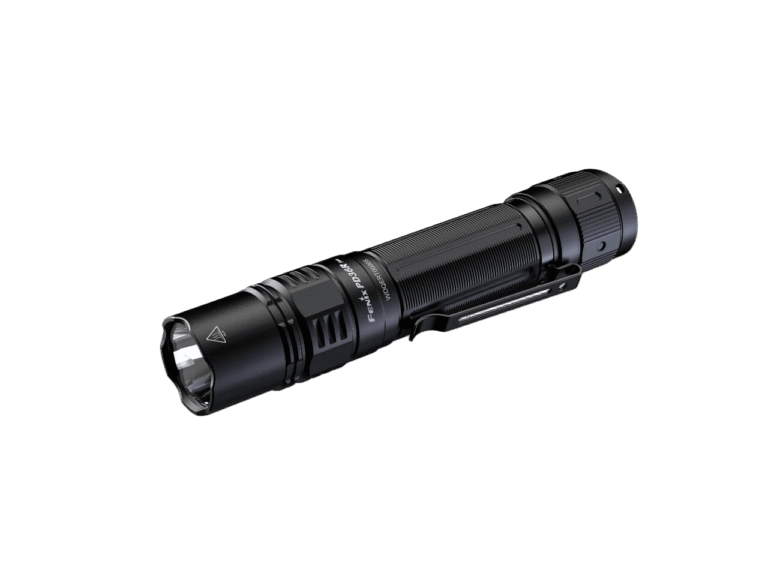
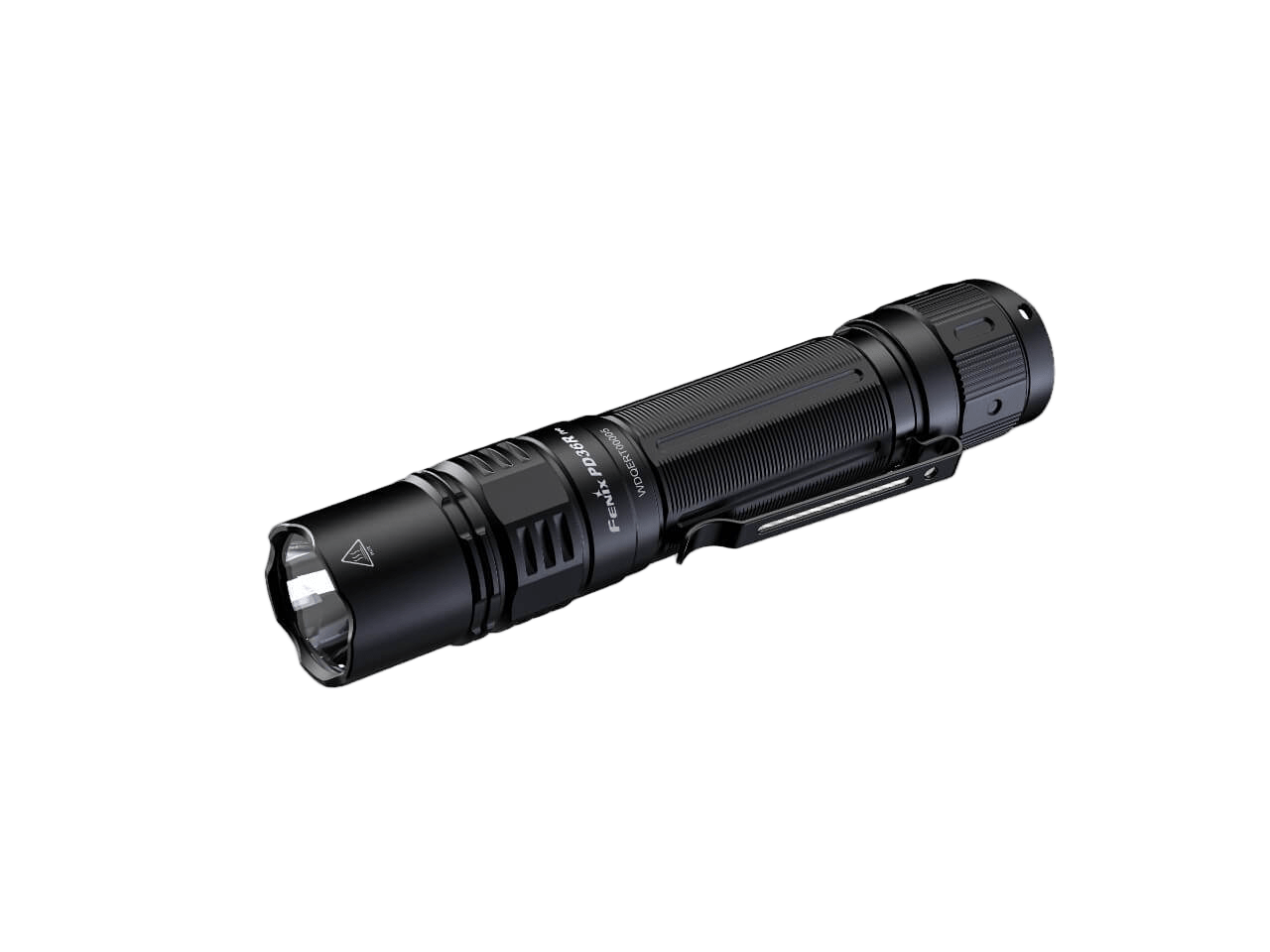
So a chart that says Turbo 3,000 lm / 3.5 hours may really mean: a few minutes (or seconds) at peak, then High, then Medium, until the light is dim. Fenix says this out loud on the PD36R Pro FAQ: turbo runtime includes thermal stepdown, per ANSI/PLATO FL1, at room temperature, on their specified cell. (Source: Fenix Lighting PD36R PRO and Fenix’s PD36R Pro explainers.)
Candela and throw are a different column. Lumens are total light. Candela is how hard the bright center spot is. More on that: Lumens Explained.
How to read a real table
Open the manufacturer page. Find the mode chart. Ignore marketing bullets until the table matches.
- Turbo line. Look for a step string like 3,000 → 780 → 280 lm and a time string like 70 sec + 120 min + 60 min. That is honest. Peak is a burst.
- High / Medium. These are usually the work modes. If High is 1,000 lm for almost four hours, that is what you plan a walk around.
- Eco / Moonlight. Marker modes. Great for a tent. Not a driveway see/identify beam.
- Battery note. Some lights block turbo below ~50% charge. That is not a defect. That is the driver protecting the cell and the LED.
Three lights on this site — same lesson
Sofirn SK30 (duty / tactical hub)
Sofirn’s U.S. Light Performance table for the SK30: Turbo 3,000 → 780 → 280 lm, 70 sec + 120 min + 60 min, with 34,250 cd / 392 m on that turbo line. High is 1,000 → 780 → 280 lm with a longer mid stretch. (Source: Sofirn U.S. SK30; as summarized on Best Tactical Flashlights.)
Read it: seventy seconds of headline, then you live around 780 lm. Shop High or Medium for work. Confirm stock and that the listing says SK30.
Buy from Sofirn Check price on Amazon
Fenix PD36R Pro (same duty job, name-brand warranty)
Fenix lists turbo at 2,800 lumens and 36,600 cd / 380 m. High is about 1,000 lm for roughly 3 h 55 m in their ANSI/FSC table. Turbo is blocked near half battery. (Source: Fenix Lighting PD36R PRO; same tactical hub.)
Same story as Sofirn, nicer warranty story. You are not buying 2,800 lumens for four hours. You are buying a two-rear-button 21700 that can hit a hard bright center spot, then settle.
Buy from Fenix Check price on Amazon
Wurkkos FC11C and HD02 PRO (budget tube vs work brick)
The FC11C is the honest cheap 18650: turbo about 1,200 lm for a short burst (Wurkkos lists a 90-second-class turbo), then you live on the mid modes. The HD02 PRO is the 21700 5-in-1; its spotlight turbo is also a thermal burst, not a camping lantern setting. (Sources: those first looks + Wurkkos product pages.)
Different jobs. Same reading rule. If the store tile only prints the peak lumen with no step-down line, treat the peak as advertising until you find the table.
Buy FC11C from Wurkkos Check price on Amazon
Buy HD02 PRO from Wurkkos Check price on Amazon
What to shop for
- A printed mode table with step-downs, not only a hero lumen.
- Candela (or throw) if the job is ID at distance — Lumens Explained.
- The cell you will actually feed: 18650, 21700, CR123A, or AA — 18650 vs 21700 vs AA.
- USB-C in the body if you want top-ups without a separate bay — Best Rechargeable Flashlights.
Skip unbranded “50,000 lumen” listings with no ANSI-style table. If the brand will not show the step-down, assume the peak is a screenshot.
Buy this habit if / skip this habit if
- Buy the habit if you were shopping turbo as all-night light. Switch your brain to High/Medium.
- Skip the panic if your light dims after a minute on turbo. That is often the design, not a lemon — check the table.
- Skip this page if you wanted a gift list. Go to How to Choose a Flashlight or Best Flashlights 2026 instead.
Bottom line
Turbo is a burst. Runtime charts that roll every step into one number are not lying — they are easy to misread. Find the table. Shop the mode you can keep. For duty-style work lights, start at Best Tactical Flashlights. For the wider map, Best Flashlights 2026.
Next read when you are ready: how to spot a fake-lumen Amazon flashlight (same skill, uglier listings).
Related: Lumens Explained · Wurkkos FC11C · Wurkkos HD02 PRO · Best Tactical Flashlights · How to Choose a Flashlight
Disclosure: As an Amazon Associate I earn from qualifying purchases. Some links are affiliate links. You pay the same.