Disclosure: As an Amazon Associate I earn from qualifying purchases. Some links are affiliate links. You pay the same.
The cell is the actual buying decision. An 18650 pocket tube, a fat 21700, a grocery-store AA, and a D-cell Maglite are four different jobs. Same “flashlight” aisle, different logistics. This page is the size explainer — what each cylinder is, what it is not, and which hub to open next. It is not a six-review roundup.
This is a spec-based first look, not a hands-on test. Numbers below come from the manufacturer or a named listing. For the buying basics see How to Choose a Flashlight. For USB-C vs sealed packs see Best Rechargeable Flashlights. For lumens vs candela see Lumens Explained. For the 2026 map see Best Flashlights 2026.
The sizes, at a glance
| Cell | What the number means | Typical fuel (named source) | Site example |
|---|---|---|---|
| 18650 | 18 mm × 65 mm lithium-ion | ~3,000 mAh class (Battery University; Wurkkos FC11C manual uses 3,000 mAh) | Wurkkos FC11C |
| 21700 | 21 mm × 70 mm lithium-ion | 5,000–6,400 mAh on lights we cite (Wurkkos, Fenix, Acebeam) | HD02 PRO, H18, PD36R Pro |
| AA | Grocery-store cylinder | Alkaline or NiMH, ~1.5 V / 1.2 V — not lithium-ion | ThruNite Archer 2A C (dual-fuel) |
| D | Big alkaline | Two D cells; Maglite Eco 260 h | Maglite ML300LX 2D |
| 14500 | AA-size lithium-ion | Not an AA. HD10: 1× 14500 only, 3.0–4.2 V | Wurkkos HD10 |
| CR123A / 16340 | Short 3 V primary / lookalike li-ion | SureFire 123A: 3 V, 1,550 mAh, 10-year shelf | SureFire 6P era — not a 2026 default |
The 18650/21700 names are the size. Battery University’s cylindrical-cell explainer: an 18650 is 18 mm in diameter and 65 mm in length. A 21700 is the larger successor of the same naming (21 mm × 70 mm). They are not interchangeable. (Source: Battery University, BU-301a: Types of Battery Cells.)
18650: the pocket lithium-ion
An 18650 is a rechargeable lithium-ion cylinder about the size of a fat AA, at roughly 3.6–3.7 V nominal — more than double an alkaline AA. Battery University puts a typical 18650 around 3,000 mAh, with energy cells climbing toward 3.1–3.4 Ah. That is the honest 2,500–3,500 mAh window. Ignore 4,000 mAh 18650 labels; those are usually fake. Pocket EDC tubes use this size because the light stays jeans-and-jacket, not coat-pocket. (Source: same Battery University BU-301a.)
Protected vs unprotected, button vs flat — the practical version. A protected cell has a small circuit on one end that cuts off on a short or a deep drain. That board makes the cell a few millimeters longer. An unprotected cell is the bare can; fine if the light already has low-voltage cutoff. Button-top vs flat-top is contact geometry: some springs need the raised positive, some tubes are too short for a protected button. Buy the cell the light maker ships, or a known brand in the polarity the manual lists. Do not mix a random “high-drain” listing into a tube that wanted a protected button-top.
Site example: the Wurkkos FC11C. Still listed as of this writing at $21.99 (was $39.98). USB-C on the body, so you charge without pulling the cell. Nichia 519A, 95 CRI, 1,200 lumens / 155 m, 1× 18650, magnetic tail, clip, 116.23 mm × 24 mm, IPX-8, turbo steps down after 90 seconds. Wurkkos’s ANSI/FL1 table is tested with a 3,000 mAh 18650. 18650 only — not AA. (Sources: Wurkkos FC11C; Wurkkos FC11(C) user manual.)
Pocket-carry context: Best EDC Flashlights. Street-price context: Best Budget Flashlights. We are not substituting an older FC11 or inventing an Amazon ASIN.
Buy the FC11C from Wurkkos (manufacturer page). Amazon search — confirm the listing says FC11C, not the older FC11:
21700: more runtime, fatter tube
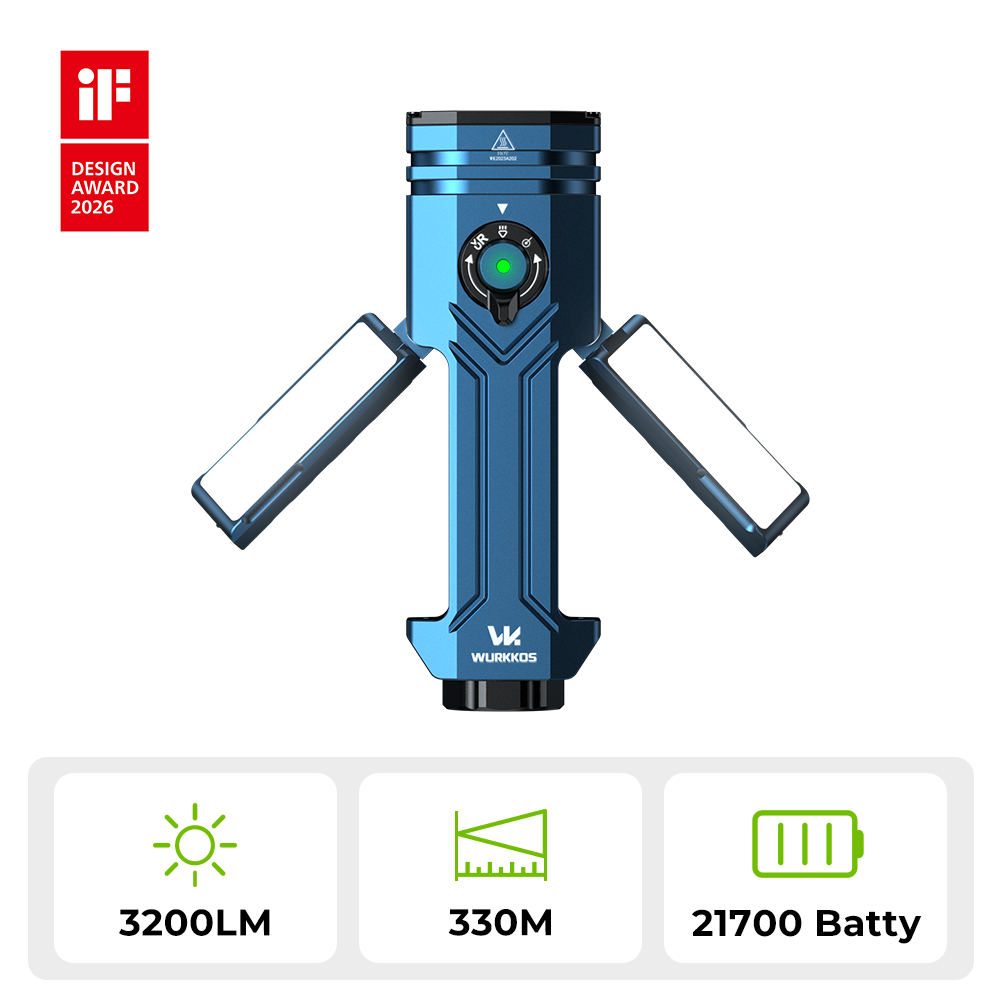
A 21700 is the same lithium-ion idea, scaled up: 21 mm × 70 mm. Battery University describes it as the larger successor, with a said capacity of up to 6,000 mAh. On this site the working examples are 5,000 mAh (Wurkkos HD02 PRO, Fenix PD36R Pro) and 6,400 mAh (Acebeam H18). More runtime and more current than a typical 18650. The catch is a fatter tube. That is a coat-pocket or headlamp cell, not a slim EDC 18650. (Source: Battery University BU-301a; manufacturer pages below.)
Wurkkos HD02 PRO — removable 21700 work hybrid, still listed as of this writing at $89.99 (launched August 5, 2026). Manufacturer claims: 3,200-lumen Luminus SFT70.2 spotlight, 330 m, 27,175 cd, dual-axis high-CRI wings, removable 21700 5,000 mAh, USB-C, up to 140 hours at 10 lumens on low spotlight, IPX6. Confirm you are buying the PRO, not the older HD02. Camp / work context: Best Camping Flashlights. (Sources: Wurkkos HD02 PRO; Wurkkos via PR Newswire, Aug 5, 2026.)
Buy the HD02 PRO from Wurkkos (manufacturer page). Amazon search — confirm the title says HD02 PRO:
Acebeam H18 — 21700 headlamp announced August 17, 2026 and still listed. Included 21700 6,400 mAh (25 A) cell, USB-C on the body and on the cell. 6500K up to 4,000 lumens / 162 m / 6,561 cd; 5000K high-CRI up to 2,700 lumens / 140 m. Turbo is a 30-second burst (4,000 ~ 700 lm). IP68. Full kit 190.6 g. List $109.90. Hands-free write-up: Best Headlamps. No verified Amazon ASIN — we are not inventing one. (Sources: Acebeam, New Product Release | H18; acebeam.com/h18.)
Acebeam H18 product page. Amazon search:
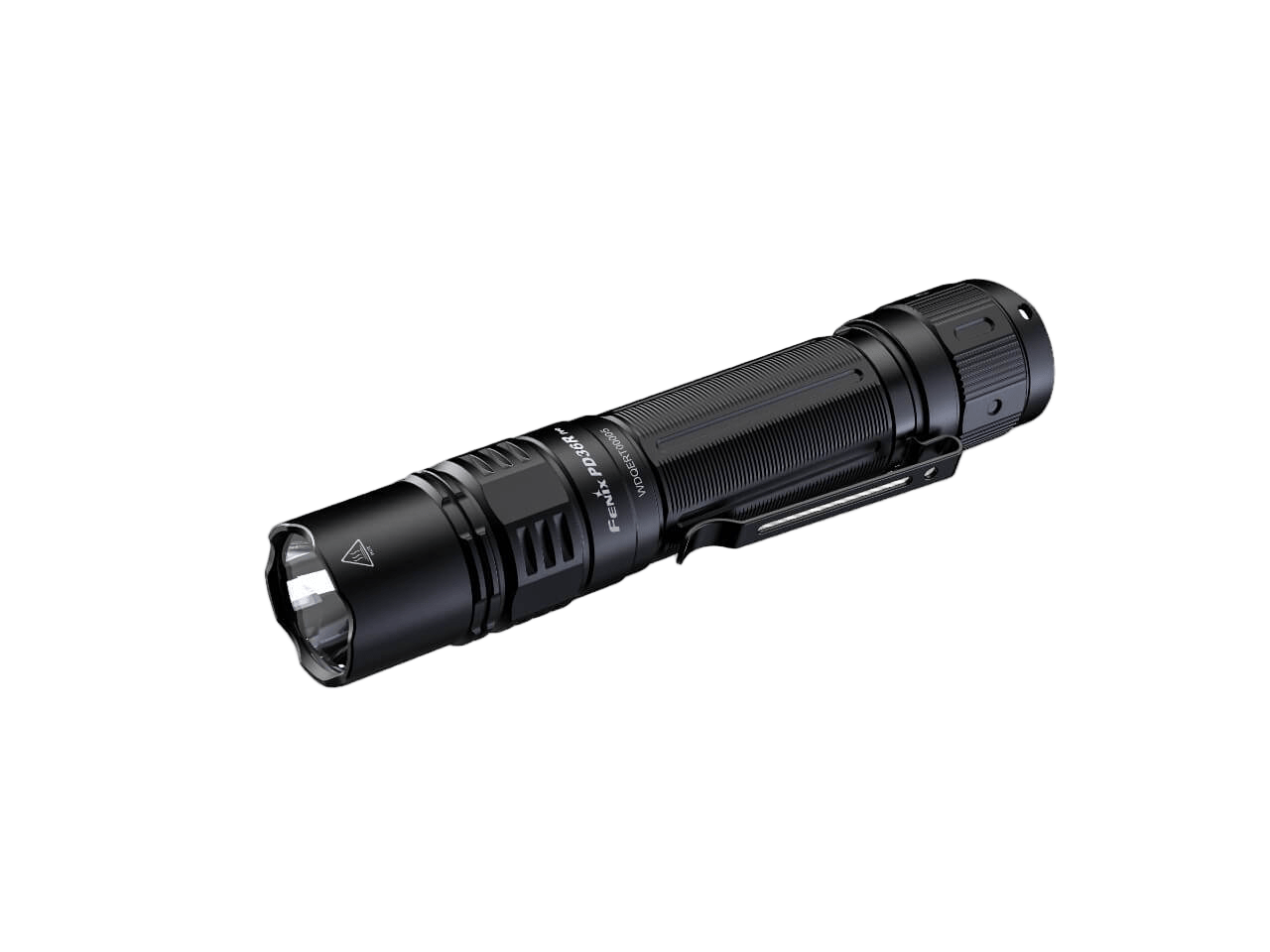
Fenix PD36R Pro — name-brand 21700 pocket/duty tube still listed in 2026 at $119.95 on Fenix Lighting; official U.S. Fenix Store matches that price. Included 5,000 mAh 21700, USB-C on the body, 2,800 lumens turbo, 380 m, IP68, 169 g with battery. Charge time about 3 hours. The light is unavailable while charging — a spare 21700 is the workaround, not a longer cable. We are not substituting the older PD36R or the newer PD36R ACE. (Source: fenixlighting.com PD36R PRO.)
Amazon search — confirm the title is PD36R Pro (not PD36R, not ACE):
AA / NiMH / alkaline: the grocery-store fallback
AA is the cell you can buy at a gas station at 2 a.m. Alkaline (~1.5 V) or NiMH rechargeable (~1.2 V). Not lithium-ion, not 3.7 V, not an 18650. Cheaper per hour only if you never needed USB. The honest 2026 use is backup: rechargeable on a good day, two standard AAs when USB is gone. Full outage write-up: Best Flashlight for a Power Outage.
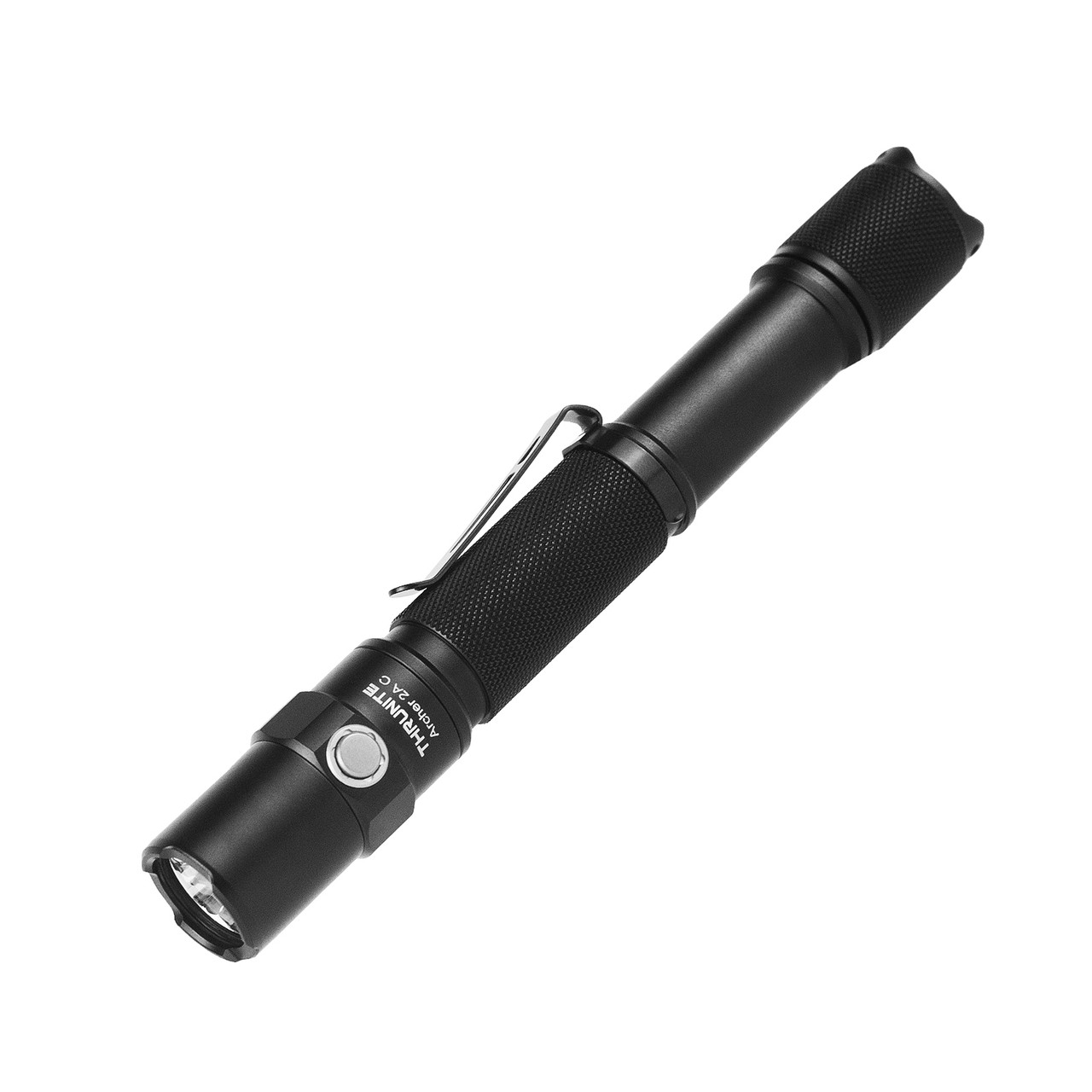
Site example: ThruNite still lists the Archer 2A C at $39.99 (SKU: ARCHER 2A C). With the included rechargeable: 1,018 lumens / 167 m / 7,000 candela. Drop in 2×AA (not included) and ThruNite rates it 500 lumens / 93 m. That AA number is the backup number. Working voltage 0.9–4.2 V — that range is why AA and li-ion both fit. USB-C is on the cell, not the body: unscrew the tail to charge. The cell is a ThruNite 141000, not a standard 18650. High on the included cell is a 30-second burst (1,018 ~ 519 lm). Do not mix this up with the AA-only Archer 2A V3. (Source: thrunite.com/archer-2a-c.)
ThruNite Archer 2A C product page. No verified Amazon ASIN — search and confirm Archer 2A C, not V3:
D-cell alkaline: when USB will not exist
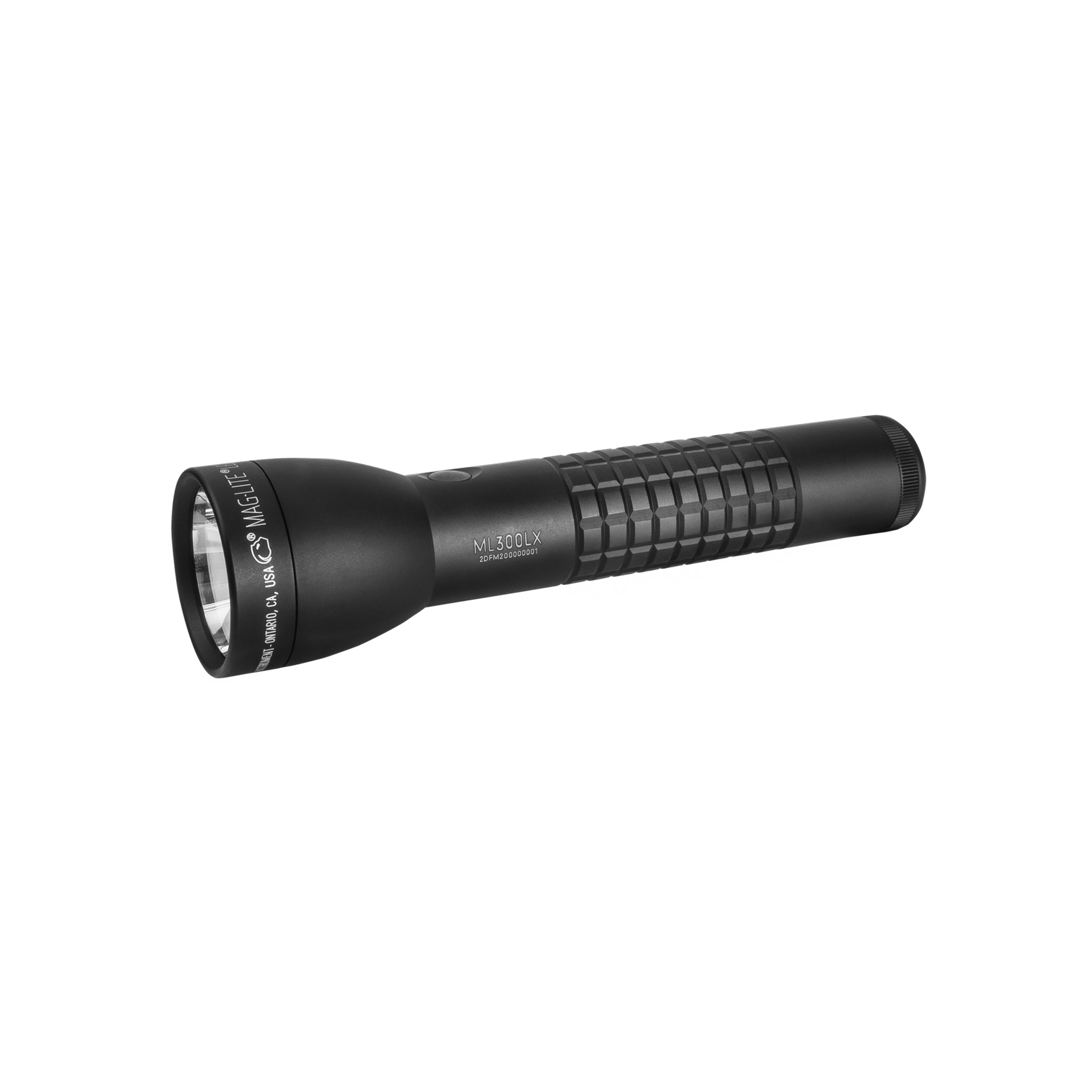
When the light sits in a car or cabin for a year, D-cell alkaline still wins on logistics. No charger, no proprietary cell, no “dead while charging.” Maglite’s current 2D LED is the ML300LX 2D, still listed as of this writing. Spec sheet: 487 lumens, 323 m, 26,139 candela, IPX4, 1 m drop, two alkaline D cells, Eco 260 hours, High 6 h 30 m, Low 101 h, 20 oz with batteries. 487 lumens is not a 2026 flex. 26,139 cd in a large, focusable reflector is a real driveway beam, and Eco 260 hours is why it belongs in a glove box. It will not take a 21700. It will not take USB-C. That is the point. Camp / car-kit write-up: Best Camping Flashlights. (Source: Maglite, Specifications — ML300LX 2D.)
Verified Amazon ASIN for the Maglite ML300LX 2D is B01189CFAE.
14500 is not an AA
A 14500 is lithium-ion in an AA-sized can (14 mm × 50 mm by the same naming as 18650). Nominal voltage is about 3.6–3.7 V, not 1.5 V. Same envelope. Different chemistry. They are not interchangeable.
Wurkkos’s HD10 is 14500 only. Still listed as of this writing (the title currently says Clearance; it is not a dead listing) at $23.99. Spec sheet battery option: 1× 14500 Li-ion. Operating voltage 3.0–4.2 V. Included 14500 900 mAh, USB-C, Anduril 2.0, 1,200 lm / 129 m, 46 g, IP68. An AA physically fits many 14500 tubes. On the HD10 it will not run the light as designed — 1.5 V is below the 3.0 V floor. That is a dead-light mistake, not a dual-fuel feature. Do not then plug USB-C into a light with an AA inside; that charger is for lithium-ion. The other direction — dropping a 14500 into an AA-only light — is the one that commonly overvolts and kills a driver. Either way: use the cell the maker printed. Pocket write-up: Best EDC Flashlights. (Source: Wurkkos HD10.)
Buy the HD10 from Wurkkos (manufacturer page). Amazon search — confirm HD10, not HD12:
CR123A / 16340: SureFire 6P-era logistics
CR123A (SureFire calls it 123A) is a short 3-volt lithium primary — not rechargeable, not an 18650. SureFire still sells them: 3 volts, 1,550 mAh, 10-year shelf life. That shelf life is why 2000s duty tubes lived on two of these in a belt pouch. The stock SureFire 6P used two 123A cells behind a P60 lamp: SureFire still lists that assembly at 65 lumens / about 1 hour for 6-volt incandescent 6P / G2 / Z2 / C2 / M2 lights. Do not put rechargeable LFP 123A cells in those incandescent lamps — SureFire forbids it. (Sources: SureFire 123A Batteries; SureFire P60 lamp.)
A 16340 is the rechargeable lithium-ion lookalike of that can (16 mm × 34 mm naming), typically ~3.6–3.7 V. SureFire’s own rechargeable 123A is a different chemistry again: SFLFP123 at 3.2 V / 450 mAh, LED tools only (SureFire SFLFP123). Same-size cells, different voltage. Do not mix them. This is 6P-era logistics, not a 2026 default. USB-C 18650/21700 replaced it for almost every new light on this site. Nostalgia lane: Best Light from the 2000s.
Spare cell vs sealed pack — and where the USB-C lives
Spare cell vs sealed pack is the rechargeable buying decision, not “does the box say rechargeable.” If the tube unscrews, pack a charged spare of the same size. If it does not, pack a power bank, or do not take that light somewhere USB will not exist. A sealed 120 mAh keychain is fine on a ring you plug in weekly. It is a paperweight as your only house light. The hub: Best Rechargeable Flashlights.
Watch where the USB-C port lives:
- On the body (FC11C, PD36R Pro, HD02 PRO, H18) — plug the light in. The cell can stay in the tube.
- On the cell (Archer 2A C; the H18’s included 21700 as a second option) — you are fishing a battery out of the tube.
Fenix’s PD36R Pro is unavailable while charging. Fenix’s own charging notes: switch off, plug USB-C into the light, about 3 hours, and “the light is unavailable while charging.” A spare 21700 is the workaround, not a longer cable. Already covered on the rechargeable page; it belongs here because it is a 21700-tube fact, not a brand quirk. (Source: fenixlighting.com PD36R PRO.)
Safety, short version
Do not mix chemistries in one light. Do not charge alkaline or NiMH in a USB-C lithium-ion charger — including an AA you dropped into a 14500 tube. Do not put a 14500 in an AA-only light, and do not put an AA in a 14500-only light and call it dual-fuel. Buy cells from the light maker or a known brand (the included 21700 in an HD02 PRO, H18, or PD36R Pro; the 18650 the FC11C manual was tested with). Skip no-name “4,000 mAh 18650” listings. That is the whole rant.
Pick the cell, then the hub
- 18650 pocket tube — Best EDC Flashlights and Best Budget Flashlights (FC11C class).
- 21700 USB-C you can swap — Best Rechargeable Flashlights. Duty tube: PD36R Pro on that page. Work hybrid: HD02 PRO. Headlamp: Best Headlamps (H18).
- Grocery-store AA when the grid is down — Best Flashlight for a Power Outage (Archer 2A C).
- D-cell when USB will not exist — Best Camping Flashlights (Maglite ML300LX 2D).
- Buying basics / lumens — How to Choose a Flashlight · Lumens Explained · Best Flashlights 2026.
Related: Best Rechargeable Flashlights · Best EDC Flashlights · Best Flashlight for a Power Outage · Best Camping Flashlights · How to Choose a Flashlight · Lumens Explained · Best Flashlights 2026 · Best Headlamps · Best Budget Flashlights · Best Light from the 2000s
Disclosure: As an Amazon Associate I earn from qualifying purchases. Some links are affiliate links. You pay the same.