

Disclosure: As an Amazon Associate I earn from qualifying purchases. Some links are affiliate links. You pay the same.
See Archer 2A C on Amazon See Maglite ML300LX 2D on Amazon
When the grid is down, a USB-C flashlight is only as good as the last charge. No wall outlet, no juice — unless you already have a power bank, a spare cell, or a light that will swallow grocery-store AAs (or D-cells). That is the whole outage problem. A 10,000-lumen Amazon lantern that needs a proprietary brick is a toy for a house with power.
Start with the picks below: The ThruNite Archer 2A C gives you 1,018 lumens with its rechargeable cell or 500 lumens with two AA batteries. The Maglite ML300LX 2D runs on easy-to-store D cells, while the Fenix PD36R Pro reaches 2,800 lumens on Turbo but needs a charged spare or power bank.
Wirecutter’s 2026 flashlight guide makes the same point: rechargeables are convenient until you cannot recharge them, so a dual-fuel AA light is the honest emergency pick. We are citing that as a named source for the idea, then checking current manufacturer listings for the numbers. (Source: Wirecutter, “The 4 Best Flashlights of 2026”.)
This is a spec-based first look, not a hands-on test. Numbers below come from the manufacturer or a named listing. For a wider 2026 map see Best Flashlights 2026. For the buying basics see How to Choose a Flashlight.
What a blackout actually needs
- Fuel you can buy in the dark. AA and D alkaline still live at gas stations. 18650/21700 USB-C does not, unless you packed a charged spare or a power bank.
- Runtime over turbo lumens. Walking the house, finding the panel, and sitting through a night last hours. Manufacturer “turbo” is often a burst. See Lumens Explained.
- A low mode. You want to move around without turning the kitchen into a stadium.
- One dumb backup. A D-cell Maglite in the car or hall closet still works after a year of sitting.
- Hands-free if you are using both hands. Breaker panel, stove, kids. That is a headlamp job: Best Headlamps.
- The fridge is the other clock. A closed fridge stays cold about four hours. If you’re weighing a battery box to keep it running, here’s how long a solar generator will run a fridge, with the watt-hour math.
The picks, with the catch on each
| Job | Light | Headline spec (manufacturer) | Honest weakness |
|---|---|---|---|
| Dual-fuel house light | ThruNite Archer 2A C | 1,018 lm / 167 m on included 141000; 500 lm / 93 m on 2×AA (ThruNite) | USB-C is on an odd-size cell, not the body. High is a 30 s burst. |
| Car-kit / D-cell classic | Maglite ML300LX 2D | 524 lm, 366 m, Eco about 69 h, IPX4 (Maglite) | Heavy. Splash-only. Alkaline D only. |
| USB-C if you can charge | Fenix PD36R Pro | 2,800 lm turbo, 380 m, 21700 USB-C, IP68 (Fenix) | No AA fallback. Needs a charged spare or a power bank. |
| AA headlamp | Wurkkos HD12 | 850 lm / 105 m on 14500, runs on AA, red LEDs, IP68 (Wurkkos) | AA output is lower than the 14500 number. |
| Room lantern | Sofirn LT1S | White and red, hook, 21700 5,000 mAh, power bank (Sofirn) | Needs a charged 21700. No output table on the store page. |
Dual-fuel AA: ThruNite Archer 2A C
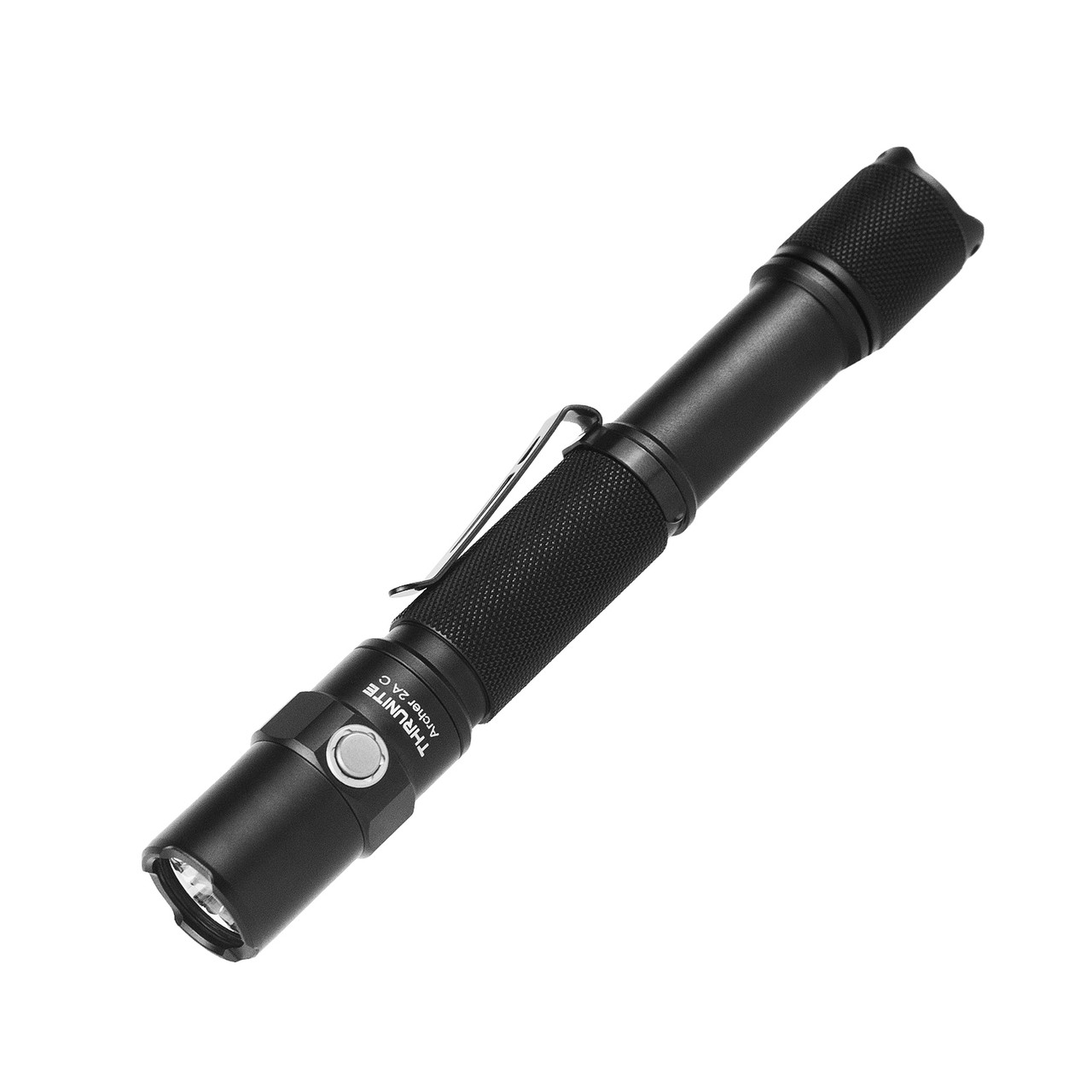
Wirecutter’s 2026 top pick is this exact dual-fuel story: an included rechargeable for daily use, and two standard AAs when the grid is gone. Their write-up is the source for that framing, not for our spec table. ThruNite still lists the Archer 2A C on the official store ($39.99 on November 19, and under $30 on Amazon the same day). SKU: ARCHER 2A C.
ThruNite’s own copy: with the included rechargeable, max output is 1,018 lumens, beam 167 m, peak intensity 7,000 candela — they call that a 100% output bump and a 79% range bump versus the AA-only Archer 2A V3. Drop in 2×AA (not included) and ThruNite rates it 500 lumens / 93 m. That AA number is the outage number. (Source: thrunite.com/archer-2a-c.)
The ANSI/NEMA FL1 table on that same ThruNite product page (tested with one ThruNite 1600 mAh rechargeable) is more honest about High: 1,018 ~ 519 lumens, 30 s + 128 min. Medium is 213 lumens / 5 h 34 min. Low is 20 lumens / 37 h. Firefly is 0.3 lumens / 27 days. Strobe 1,000 lumens / 120 min. Max 167 m / 7,000 cd. Impact 1.5 m. IPX-8 (2 m). AL 6061-T6, type III hard-anodized, 155 × 22 mm, 101 g. Working voltage 0.9–4.2 V — that range is why AA and li-ion both fit. Included: pocket clip, 1600 mAh cell, spare O-rings, lanyard, USB-C cable. (Source: ThruNite, Archer 2A C ANSI/NEMA FL1 table on the product page.)
The cell is not a standard 18650. ThruNite’s battery page calls it a 141000, 1600 mAh, 3.7 V / 5.92 Wh pack with USB-C on the cell, 14.5 × 99.5 mm, 44.2 g, 5 A max discharge. Product-page charging note: unscrew the tail to charge the battery. (Sources: ThruNite 141000 battery; Archer 2A C product page, “Unscrew the tail to charge the battery.”)
Weaknesses: High is a 30-second burst, then 519 lumens. The USB-C port is on a proprietary-length cell, so you are fishing a battery out of the tube in the dark. AAs are the backup, not a 1,018-lumen mode. Do not mix this up with the AA-only Archer 2A V3. Spec-based first look only; we have not had a sample on the desk.
Verdict: Buy. If you buy one light for an outage kit, buy this one.
Who it’s for: every house. Keep it in the kitchen drawer next to a pack of AAs.
Who should skip it: people who want to light a whole room. A lantern does that better.
Buy from ThruNite, or check Amazon and confirm the listing says Archer 2A C, not the AA-only V3:
Classic D-cell / car-kit: Maglite ML300LX 2D
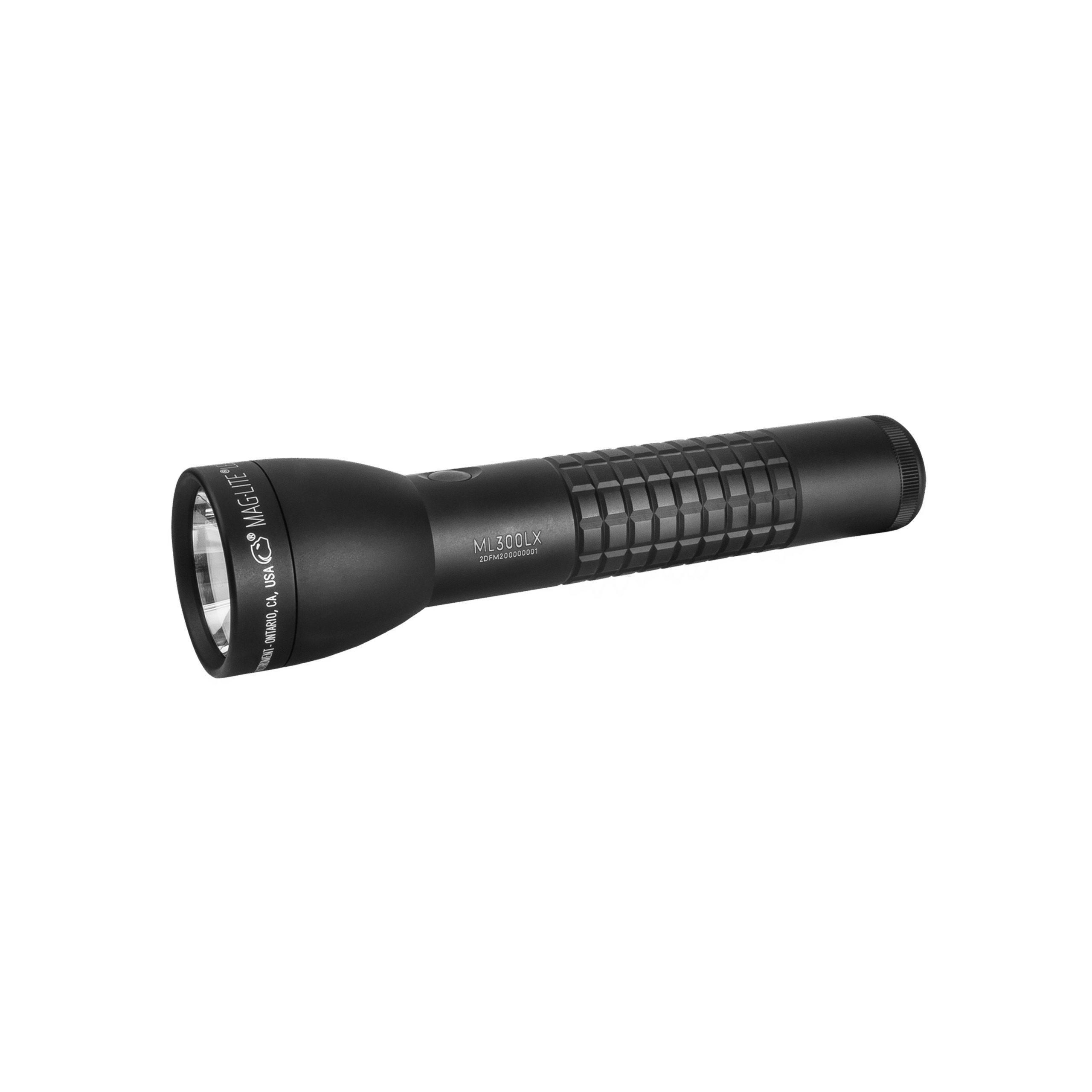
If the job is “this lives in the car or hall closet and has to work after a year of sitting,” D-cell alkaline still wins on logistics. Maglite’s current 2D LED is the ML300LX 2D. Maglite’s spec sheet lists 524 lumens, 366 m beam distance (about 400 yards), 33,573 candela, IPX4 water resistance, 1 m drop, two alkaline D cells, and Eco runtime of about 69 hours. High is about 6 h 30 min; Low is 20 h. Maglite’s older spec sheet still shows 487 lumens and 260 hours on Eco; the current listing is the one to use. Weight with batteries is 20 oz. The head still twists from spot to flood in less than a quarter turn. Amazon had it in stock at about $45 on November 19. (Source: Maglite, ML300LX 2D product page.)
Maglite rates these on alkaline D cells; rechargeable NiMH D cells may come in a bit lower.
524 lumens is not a 2026 flex. 33,573 cd in a large reflector is a real driveway beam, and Eco about 69 hours is why it belongs in an outage kit. Compare that to a USB-C tube that is dead in the drawer. We unpack lumens vs candela on Lumens Explained.
Weaknesses: it is a club, not a pocket light. IPX4 is rain, not a dunk. You are buying alkaline D cells, not USB-C. It will not hang and light a room the way a lantern does. If you want a tent/table lantern instead, that is a different job: Best Camping Flashlights.
Verdict: Buy, for the car or the hall closet. D cells sit for years and nothing needs charging.
Who it’s for: drivers and anyone who wants a light that ignores the state of the grid.
Who should skip it: small apartments with no car. It’s big and heavy for indoor use.
Optional USB-C 21700: Fenix PD36R Pro (needs a charged spare or a power bank)
USB-C 18650/21700 lights are better per hour when you can charge them. The honest outage add-on is a power bank (or a spare 21700 already sitting charged). Without that, this class is a paperweight. Wirecutter’s 2026 guide says the same thing about rechargeable-only lights: in a power outage you would need charged cells or a power station.
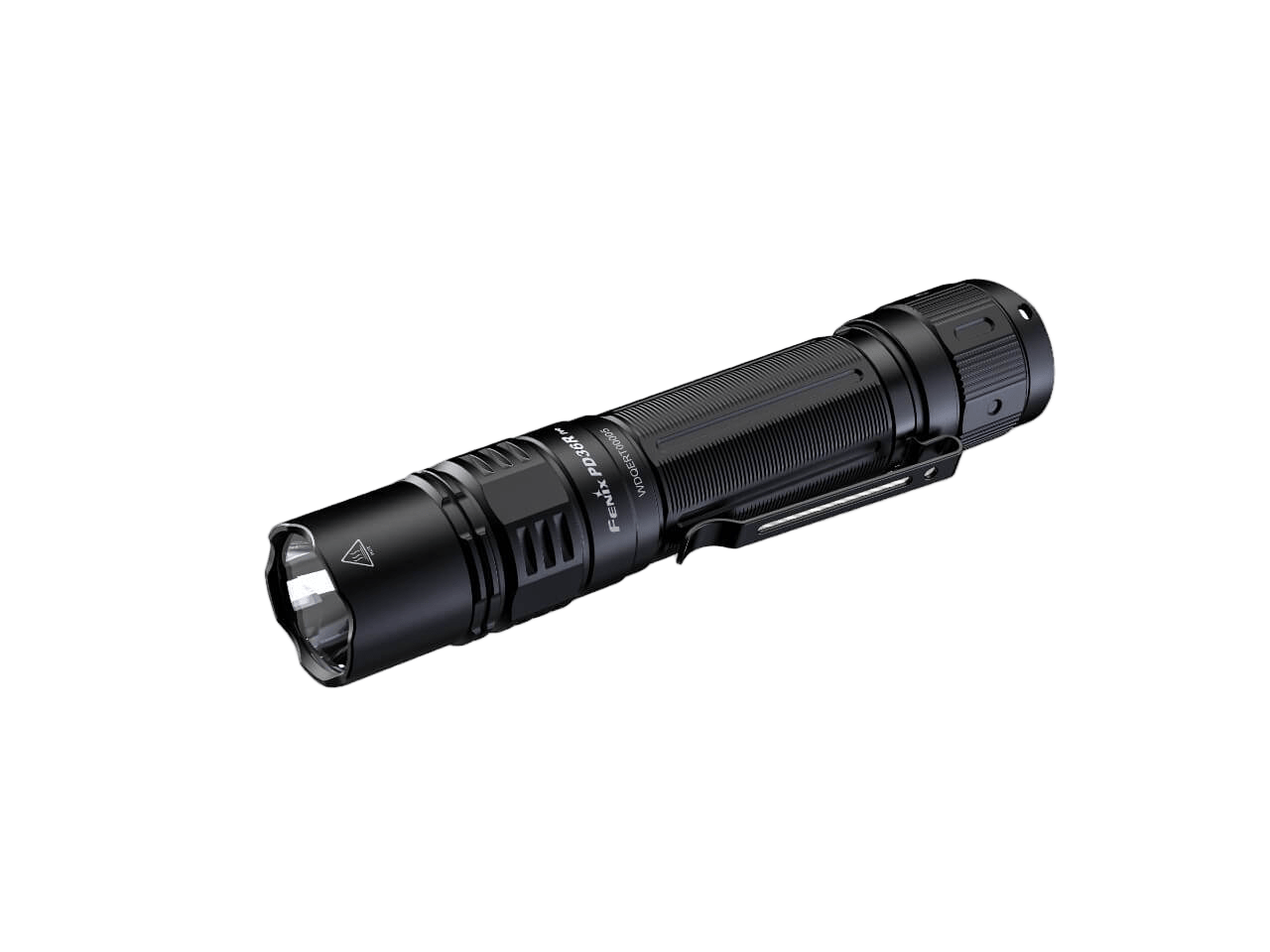
The PD36R Pro is a current Fenix 21700, listed on Fenix Lighting and on the official U.S. Fenix Store. Fenix Lighting: Luminus SFT70, 2,800 lumens turbo, 380 m / 1,247 ft, max runtime 42 hours, dual tail switches, included 5,000 mAh 21700, USB Type-C, A6061-T6, HAIII, IP68 to 2 m, 145.8 mm, 169 g with battery. Charge time about 3 hours. The light is unavailable while charging. (Source: fenixlighting.com PD36R PRO.)
Read turbo before you buy a “2,800-lumen outage light.” Fenix Lighting’s ANSI/FSC table: Turbo 2,800 lm / 3 h 30 m total including thermal stepdown; High 1,000 lm / 3 h 55 m; Eco 30 lm / 42 h; turbo peak 36,600 cd. Turbo is blocked at roughly 50% battery. Fenix’s own FAQ: turbo runtime is ANSI/PLATO FL1 total runtime, not 2,800 lumens for 3.5 hours. (Source: Fenix Lighting, “Everything You Need to Know About the Fenix PD36R PRO”.)
Weaknesses: no AA or D-cell fallback. If the 21700 is empty and you have no power bank, you have a stick. Turbo will step down; plan on High or Eco for a long outage. Dual tail switches take a minute to learn. This is the optional pick, not the first one you buy for a hurricane kit.
Verdict: Skip as your first outage light. It’s bright, but it depends on charging.
Who it’s for: people who already own a power bank or a solar generator.
Who should skip it: anyone building a kit from scratch. Buy the Archer 2A C first.
Check Amazon and confirm the listing says PD36R Pro, not the older PD36R:
USB-C 21700 lights need a charged spare or a power bank. A portable power station is the indoor battery that can recharge that light and keep a fridge plus a router in the FDA 4-hour food-safety window. Specs, not a whole-house system: Best Solar Generator for Home Backup (Fridge and Router).
Headlamp that takes AA: Wurkkos HD12
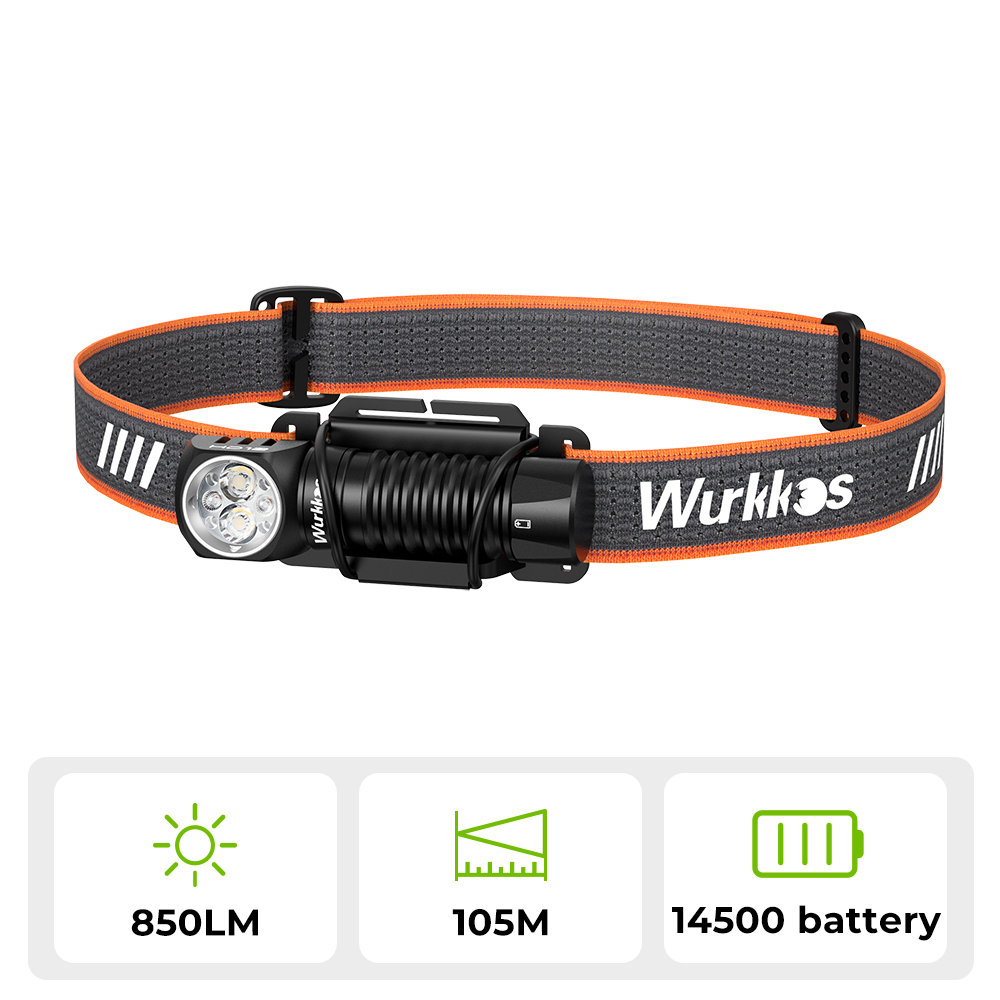
A blackout is easier with both hands free, for flipping breakers or cooking on a camp stove in the kitchen. The HD12 is a small right-angle headlamp that runs on a 14500 rechargeable or an ordinary AA, so it can share batteries with the Archer 2A C.
Wurkkos rates it at 850 lumens and 105 m on a 14500. It has two 5000K high-CRI white LEDs, two red LEDs, a magnetic tail and an IP68 rating. Amazon’s regular price was $39.99 on November 19, and Wurkkos had it marked down.
Verdict: Buy. It’s the headlamp I’d put in an outage kit.
Who it’s for: anyone who keeps AAs in the house.
Who should skip it: people who want a long, bright run on alkaline AAs.
Honest cons: Wurkkos doesn’t print the AA output on its product page, so expect less than 850 lumens on alkaline. Amazon showed only nine left on November 19.
Check price on Amazon Buy from Wurkkos
Lantern for the living room: Sofirn LT1S
A flashlight pointed at the ceiling makes a poor room light. A small lantern on the coffee table is better. The LT1S gives you white or red light, a hook to hang it, and a removable 21700 cell, so a charged spare gets you through a long night.
Sofirn says it can also charge a phone, which matters once the power has been out for a day. It’s rated IPX8, and Sofirn’s U.S. store had it at $45.99 on November 19.
Verdict: Buy, if you’ll keep a spare 21700 charged. A lantern makes a dark house feel normal again.
Who it’s for: families who want one soft light in the main room.
Who should skip it: anyone building an AA-only kit. This one needs a charged 21700.
Honest cons: Sofirn’s store page has no output or runtime table. Charging a phone from it drains the same cell you need for light. We link Sofirn’s store for this one, not Amazon.
How the five compare
| Light | Battery | Best for | Price (Nov 19) | Call |
|---|---|---|---|---|
| ThruNite Archer 2A C | ThruNite cell or 2×AA | The drawer light | Under $30 on Amazon | Buy |
| Maglite ML300LX 2D | 2×D alkaline (not included) | Car and closet | About $45 on Amazon | Buy |
| Fenix PD36R Pro | 21700 (included) | Bright light, if you can recharge | $120.45 on Amazon | Skip as a first outage light |
| Wurkkos HD12 | 14500 or AA | Hands-free | $39.99 on Amazon | Buy |
| Sofirn LT1S | 21700 5,000 mAh (included) | Room light | $45.99 at Sofirn | Buy |
Prices were checked on November 19, 2026. Buy before storm season, not during it.
A simple outage kit
- One dual-fuel AA light (Archer 2A C class) in a drawer, plus a sleeve of AAs.
- One D-cell Maglite in the car or hall closet — the light that does not care about USB.
- Optional: one USB-C 21700 (PD36R Pro class) and a charged spare or a power bank. A portable power station is the indoor battery that can recharge that light and keep a fridge plus a router in the FDA 4-hour food-safety window. Specs, not a whole-house system: Best Solar Generator for Home Backup (Fridge and Router). The light alone is not the kit.
- A headlamp if you need both hands: Best Headlamps.
Skip the unbranded “10,000 lumen” Amazon lanterns and no-name flood tubes. If the brand will not publish an ANSI/PLATO FL1 table, treat the lumen claim as advertising. More on that: Lumens Explained. If you actually want a hanging lantern for the table, that is the camping page, not a junk listing: Best Camping Flashlights.
What’s the best flashlight and battery combo for a power outage?
A dual-fuel AA light plus a rotated pack of AAs, so you never wait on USB power.
The ThruNite Archer 2A C on this page is that combo: use the included rechargeable cell for daily work, then drop in store-bought AAs when the power is out. Keep a sleeve of AAs in the same drawer and swap the pack once or twice a year. The Maglite ML300LX 2D is the other half of a simple kit, because D cells also sit well for a long time in the car or hall closet.
What’s the best flashlight for getting around a large home in an outage?
A floody light on low beats a long-throw beam indoors. Keep one light per floor, plus a headlamp.
Indoors you want a wide beam you can leave on a low mode, not a tight hotspot that leaves the hallway dark. The Archer 2A C on low is the house light. Put one in a drawer on each floor so you aren’t walking a big house in the dark just to go get it. Add a headlamp if you need both hands at the breaker panel or with kids.
Related: Best Flashlights 2026 · How to Choose a Flashlight · Best Rechargeable Flashlights · Best Camping Flashlights · Best Headlamps · Maglite 2D era
Disclosure: As an Amazon Associate I earn from qualifying purchases. Some links are affiliate links. You pay the same.